John Fithian came to represent NATO as outside counsel in Washington in the summer of 1992,
and then joined the organization full-time as its President in January 2000. Over the past thirty
years, and with the strong support of NATO members and staff, NATO’s effectiveness and
ability to represent the exhibition industry grew in a number of key ways. Some highlights
follow (download report).
Working with a Committed Member Leadership Group
NATO is a voluntary member organization, consisting of companies and individuals who operate
motion picture theaters. Fithian and the NATO team have been guided over the years by an
active Board of Directors, including in particular the chairpersons of those Boards. Most
recently, two individuals have contributed thousands of hours of their time to help guide NATO
and the exhibition industry through and out of the pandemic – Past Chairman Ellis Jacob, and
the current Chairman Rolando Rodriguez.
Developing a Successful Team
NATO’s strength comes from its members as well as its professional staff. The most important
thing trade association leaders can do is hire and develop good staff, and recruit and inspire
volunteer members. NATO now has the most effective staff team, and the most active and
numerous voluntary members in its history. Here are some numbers:
• 3215 recipients of general NATO updates (all NATO member personnel)
• 619 members of various committees and task forces
• 19% individual committee participation
• 309 Member Companies represented on Committees & Task Forces out of 1104 Member companies
• 28% Member Companies represented on Committees & Task Forces
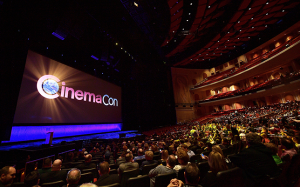
Launching CinemaCon
In 2010-2011, Fithian worked with several key members to hire the best team and launch
CinemaCon. The CinemaCon team have held eleven successful conventions. CinemaCon has
grown to the be the largest and most influential convention for movie exhibitors in the world.
Navigating the Transition to Digital Cinema
The industry’s transition from film to digital technologies posed many opportunities and
challenges for exhibitors. Fithian, the NATO staff, and a committed team of member volunteers
worked with studio colleagues and technology companies to guide a careful transition. NATO
organized a set of guidelines and exhibitor “needs” both in a global exhibition call for technical
standards and fair business models, and in NATO Board resolutions. As for the technology,
exhibitors insisted that digital cinema not be deployed until the quality and functionality of
digital cinema matched or exceeded that of film, and until a fair business model could be
established, where distributors would shoulder the majority of costs given their substantial
savings in film print costs. The development of the virtual print fee model, with separate
negotiated plans for large and small exhibitors, was one important result of these efforts.
Growing a Sizable Nest Egg to Prepare for the Eventual “Rainy Day”
Under the leadership of Fithian and a strong sequence of eight committed chairpersons,
NATO’s Board, staff and members developed a substantial nest egg for the eventual “rainy day”
that came when the COVID pandemic hit in 2020. Between 2000 and 2020 NATO’s reserve fund
and other net assets grew by 1200% by operating consistently with surplus budgets and by
investing wisely.
Helping NATO Members Survive the Pandemic
With the support of a very active Executive Board, Chairmen Jacob and Rodriguez, and
hundreds of committed NATO member volunteers, the NATO team gave its greatest effort to
date working to help exhibition survive and recover from the pandemic. The reserve fund came
to be essential in these efforts. NATO spent millions helping employees in need; developing
safety protocols backed by epidemiologists to aid in the re-opening of cinemas, then promoting
those protocols to increase guest confidence in returning to cinemas; lobbying state and local
governments both on re-opening cinemas and on tax and grant relief for exhibitors of all sizes;
lobbying the federal government to protect tax benefits as well as the creation a grant program
for smaller and mid-size companies. Communication during the pandemic was essential with
weekly meetings of the Executive Board and weekly webinars regularly joined by more than
400 members.
Working to Protect and Grow Theatrical Releases with Windows
By developing strong relationships with studio leaders and leading movie directors, NATO has
consistently lobbied over the years to protect and grow theatrical releases with windows – the
lifeblood of exhibitors. NATO tracks the coming supply of movies and windows data closely and
discusses that data throughout Hollywood. NATO initiated the analysis of piracy data to
demonstrate that short or non-existent windows exacerbate piracy. NATO has and continues to
lobby movie streaming companies to release movies theatrically with windows.
Lobbying the Federal Government to Save Exhibitors Money
Fithian came to NATO in 1992 as a professional lawyer/lobbyist and has led NATO’s professional
government relations team ever since. Strong member “grass roots”, though, are the key to
NATO’s advocacy successes. Throughout the years NATO has lobbied Congress, the
Administration and the agencies to save exhibitors money, either in tax policy, wage and labor
policies, licensing policies, or other matters. One recent example is the work to defeat an effort
by the Department of Justice to repeal the exemption domestic exhibitors enjoy from paying
music licensing fees for music in movies they exhibit.
Protecting the Voluntary Movie Rating System
In his role as outside counsel, and then for many years as President, Fithian led the effort to
defeat legislation in Congress to regulate “violent media” in ways such as codifying the movie
rating system into law and assessing penalties on exhibitors for violations of that law, as well as
proposals to tax violent media, including movie exhibition. NATO works with member
volunteers in overseeing the rules of the movie rating system in partnership with the MPA, and
in staffing the appeals board of the rating system. NATO also submitted amicus curiae briefs in
several cases, and defended directly as a party in one case, in a successful effort to maintain
First Amendment protections of the voluntary rating system.
Fighting Movie Piracy
NATO has partnered with the MPA for many years in successful efforts to reduce the negative
financial impact of movie piracy. NATO coordinated with the MPA to use forensic tracking
technologies to identify “camcorder thieves” and to aid in their arrest. NATO also created a
network of safety officers to prevent camcording and to identify sources of piracy; lobbied for
legislation at the state and federal level to impose criminal penalties on pirates; and took to an
international road show to share best anti-piracy techniques with exhibitors in other countries
Promoting the Industry Publicly
Working with the association’s expert communications team, Fithian has served as the lead
public spokesperson for the exhibition industry. NATO works routinely to promote theatrical
exhibition within the industry, in the media, and with financial analysts.
Growing Exhibition Internationally/Fostering Collaboration Globally
Over the past twenty years, NATO has expanded beyond it pure domestic base to both help exhibition grow internationally and to foster collaboration globally. As an example of the former, Fithian led a team of members and staff experts in meetings over the course of several weeks in Riyadh with the government of the Kingdom of Saudi Arabia. The KSA government then legalized cinema operation for the first time in decades, allowing several NATO members to begin building cinemas there. And more recently, NATO worked with staff colleagues, members, and colleagues in Europe to create the Global Cinema Federation. NATO has grown from a relatively small domestic operation to representation of exhibitors in more than 100 countries.
Launching the NATO Cinema Foundation
Though the “proof will be in the pudding”, the launch of the Cinema Foundation will be an
historic expansion of NATO’s service to its members and the broader movie industry. Under the
guidance of the Foundation’s staff leadership team and Board members, The Cinema
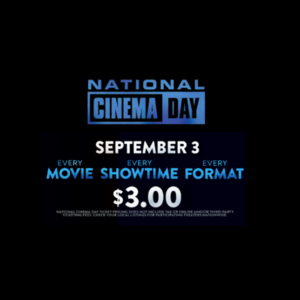
Foundation launched at CinemaCon. 2022. Since then, the Cinema Foundation has organized a
very successful “National Cinema Day” on 3 September 2022 as well as an educational summit
in Los Angeles. Additional areas of focus will include: staffing issues and diversity; creative
community involvement; industry promotion; innovation and technology; research and data;
and charity support.